


Your Story Doesn’t Need Code. It Needs a Way Out
For years, I had a visual novel in my head.
Characters with personalities.
A world with its own internal logic.
Scenes I kept replaying over and over.
But every time I tried to build it, I hit the same wall:
tools that required code.
So I stopped trying.
Until last month.
What If You Could Build a Game Like Editing a Video?
Instead of opening a game engine, I opened Octokit – a gamification platform designed for brands and individuals to easily create engaging interactive experiences.
No setup. No installs.
Just one simple prompt:
“Describe your game and we’ll generate a starting point.”
So I tried.
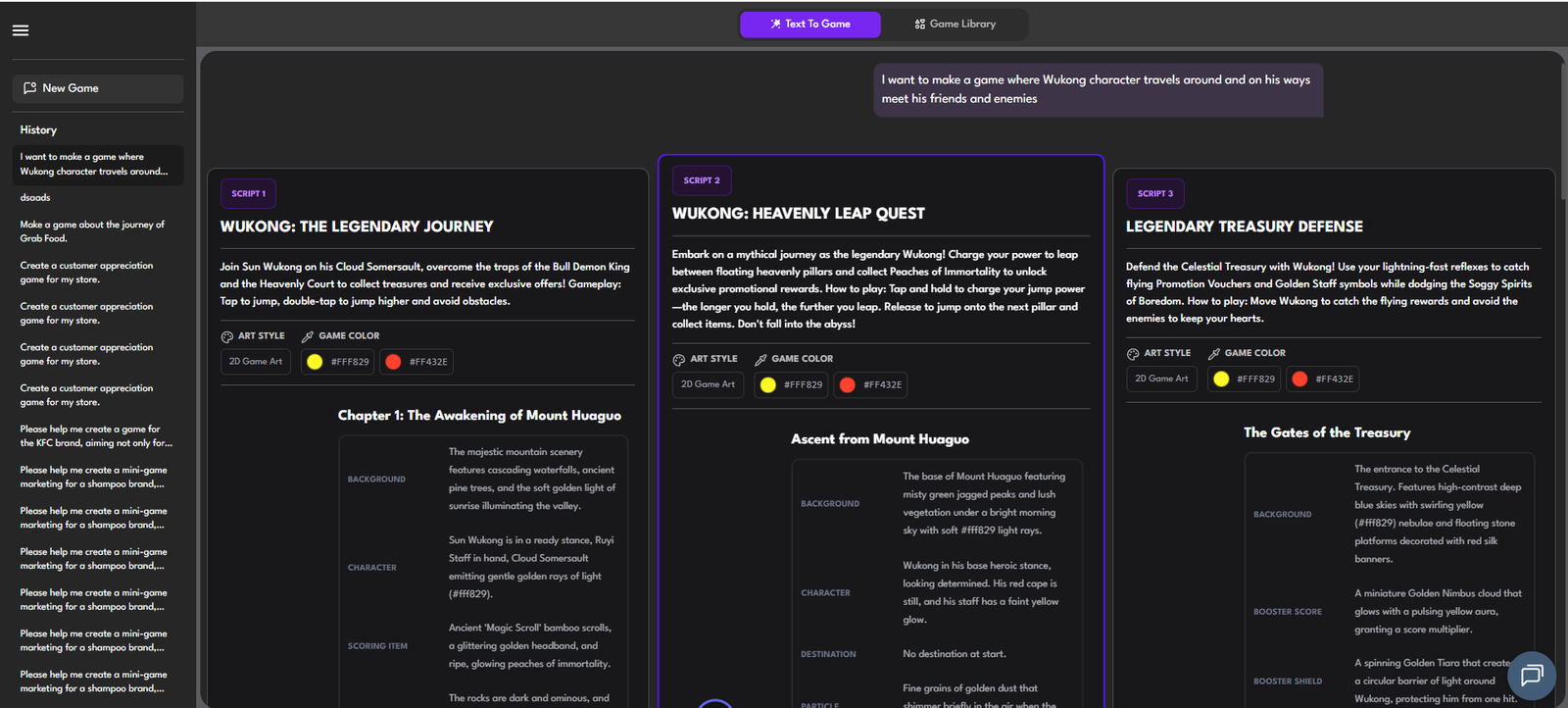
When I finally opened the editor, I wasn’t met with a terminal or a script editor. Just a simple, clean prompt asking me what I wanted to build. It felt less like ‘programming’ and more like having a conversation with a producer.
Friday Night: From Idea → Playable Structure in 3 Hours
I started with a simple concept:
A young archivist discovers books disappearing—not stolen, but unwriting themselves.
Within seconds, Octokit generated:
- A story structure (score track)
- Three key encounters
- Named characters (NPCs)
- Rough dialogue
Was it perfect? No.
But it gave me something I never had before:
momentum.
Instead of staring at a blank screen, I was editing something real.
By the end of the night:
- Story structure: done
- Dialogue: rewritten
- Flow: playable
Time spent: ~3 hours
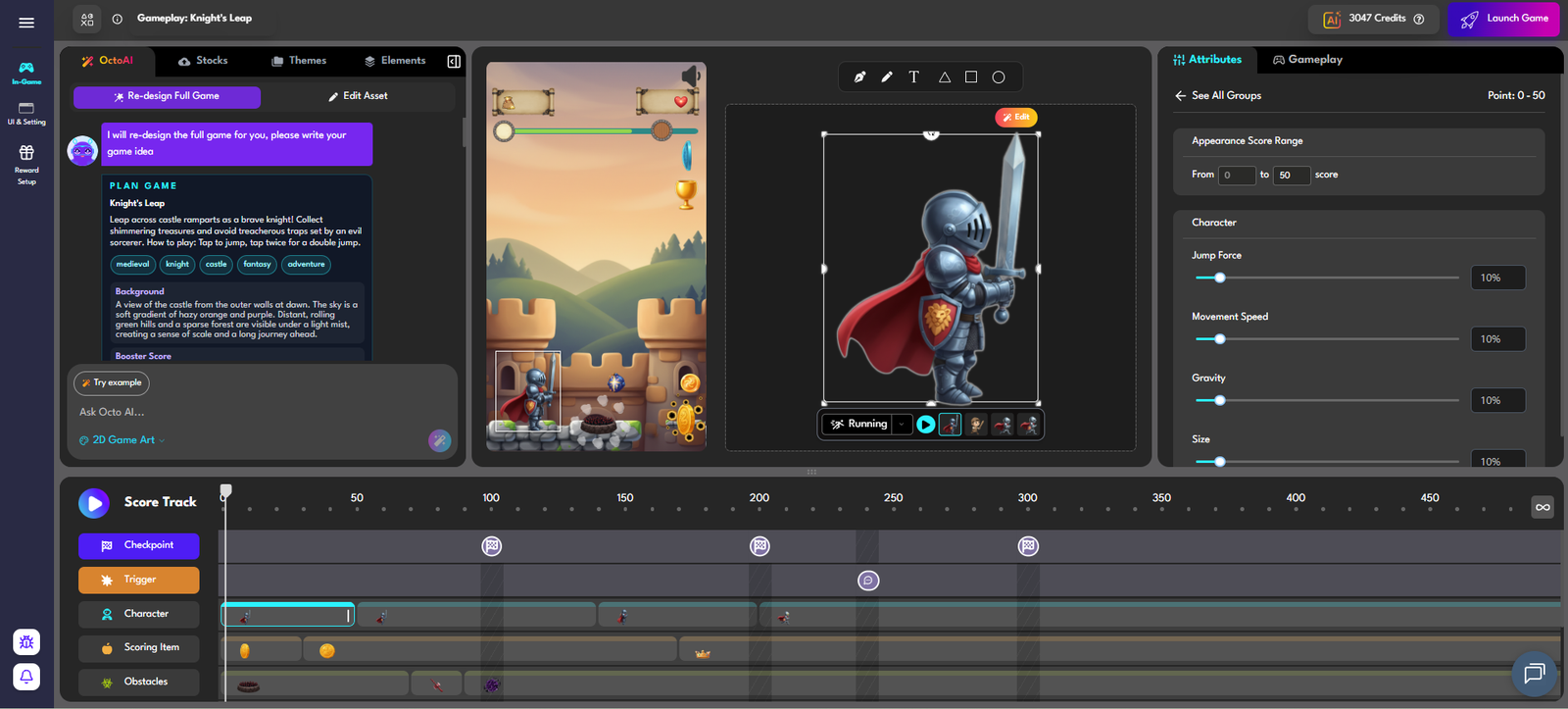
Friday night was all about momentum—the tool became my workbench. I spent hours dragging assets onto the timeline and shaped the Score Track to match my story’s emotions.
Why This Works (And Why Most Tools Don’t)
Most creative tools fail at the same point:
the blank page.
Octokit Tool removes that friction by generating a starting structure:
- Where scenes should go
- Emotional pacing
- Character flow
You’re not replacing creativity.
You’re accelerating it.
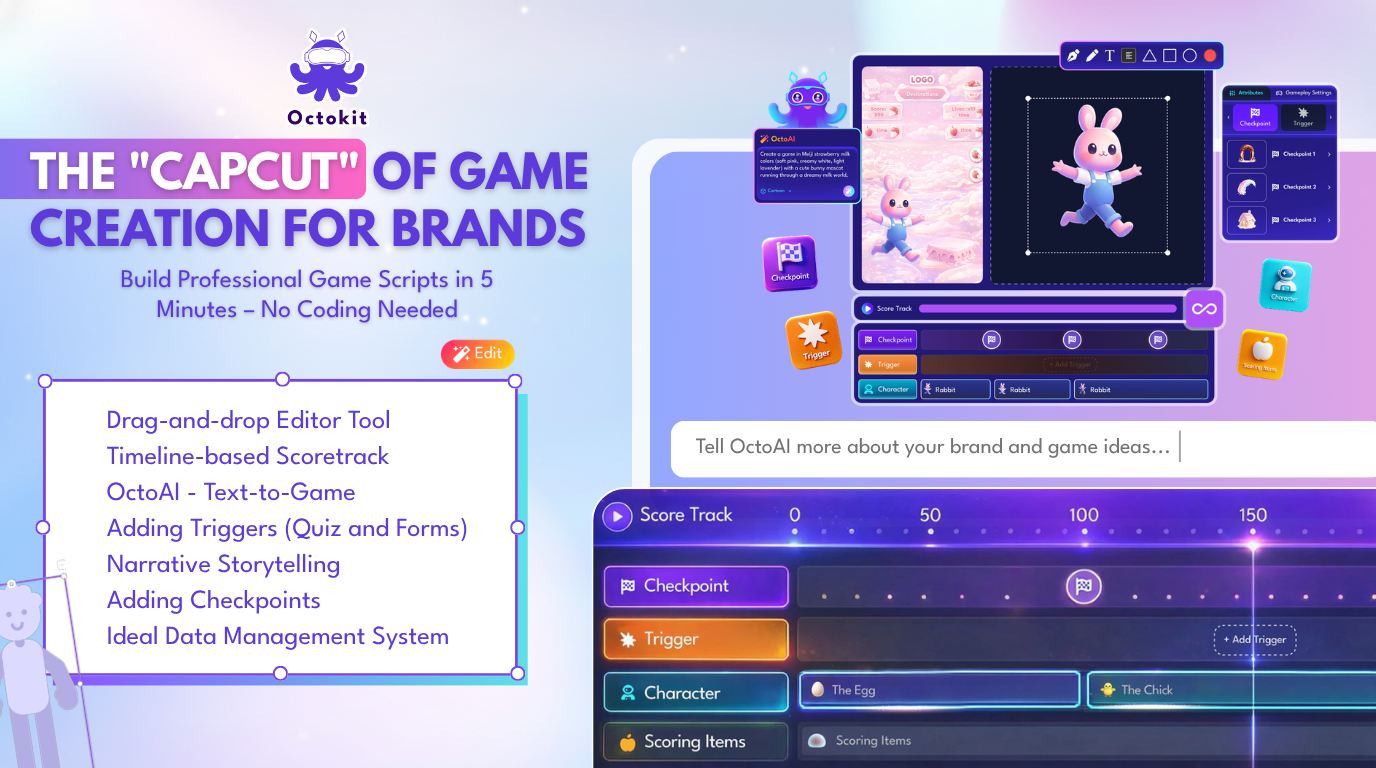
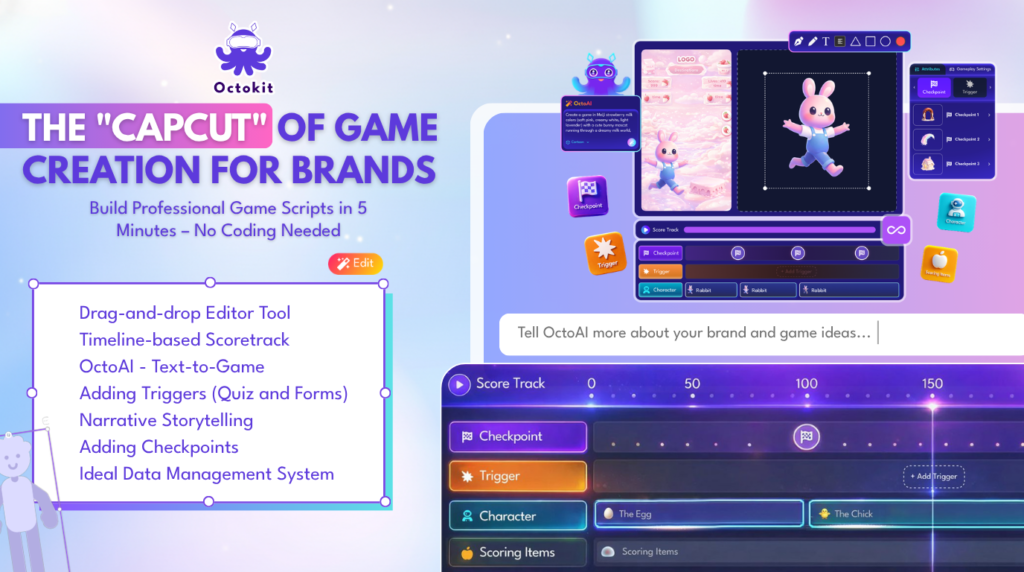
The ‘blank page’ is where dreams die. Octokit’s solution is to become your accelerator. Looking at this breakdown, you see a tool designed not just to ‘make games,’ but to ‘build game scripts in 5 minutes.’
Saturday: Turning Words Into a World
This is where things usually fall apart.
I’m not an illustrator.
But with a simple stack:
- AI image generation (MidJourney or even Octokit’s OctoAI)
- Free assets (OpenGameArt)
- Basic editing (Canva)
I built:
- Character portraits
- Background scenes
- Visual transitions
What Octokit Did Better Than Expected
Uploading assets was fast:
- Drag & drop
- Auto-resize
- Instant preview
No formatting headaches.
No technical blockers.
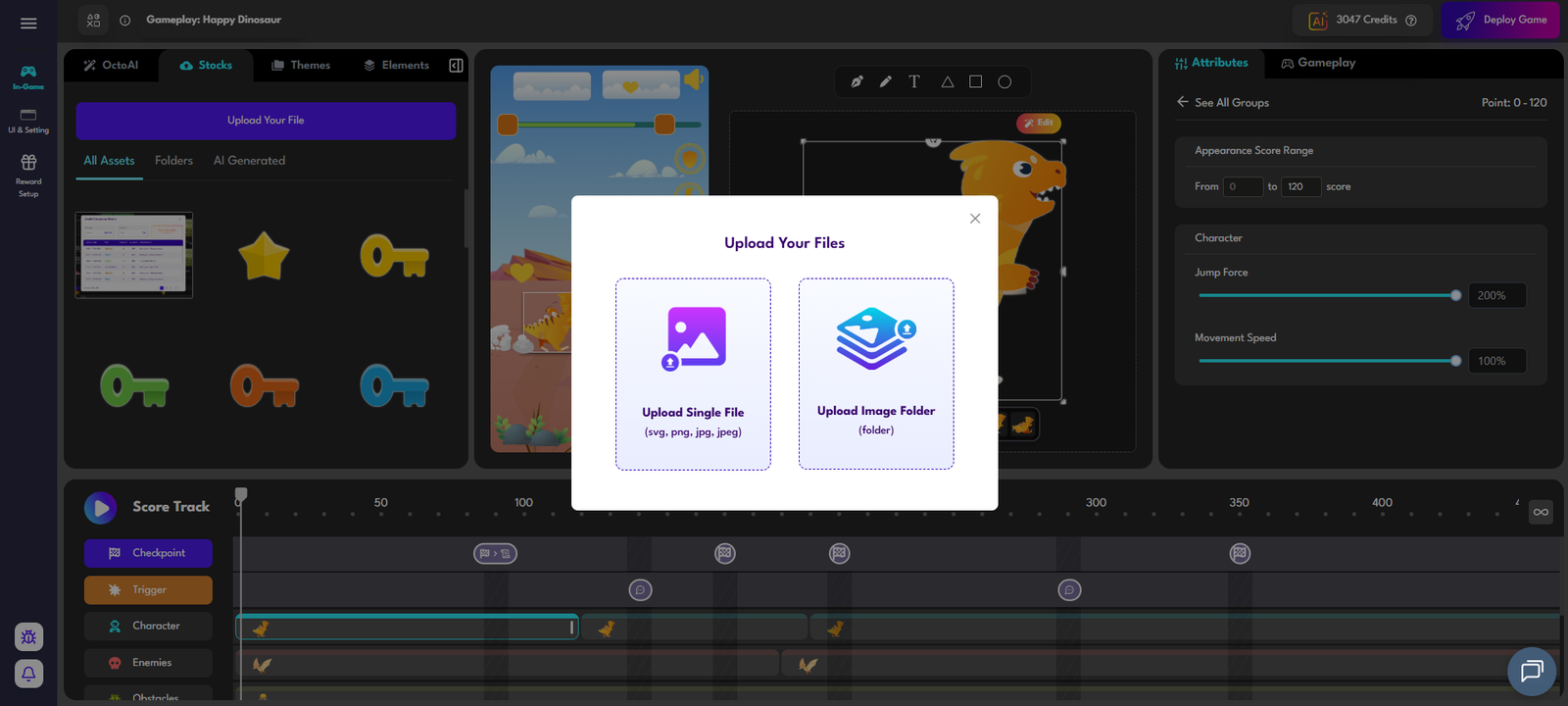
The interface is built for speed. I didn’t have to be a technical artist to get my assets looking right—I just had to click upload
The Reality of AI Assets
AI is fast—but not perfect.
I had to:
- Regenerate character images multiple times
- Fix framing issues
- Adjust consistency between scenes
Lesson:
Budget more time for visuals than you think.
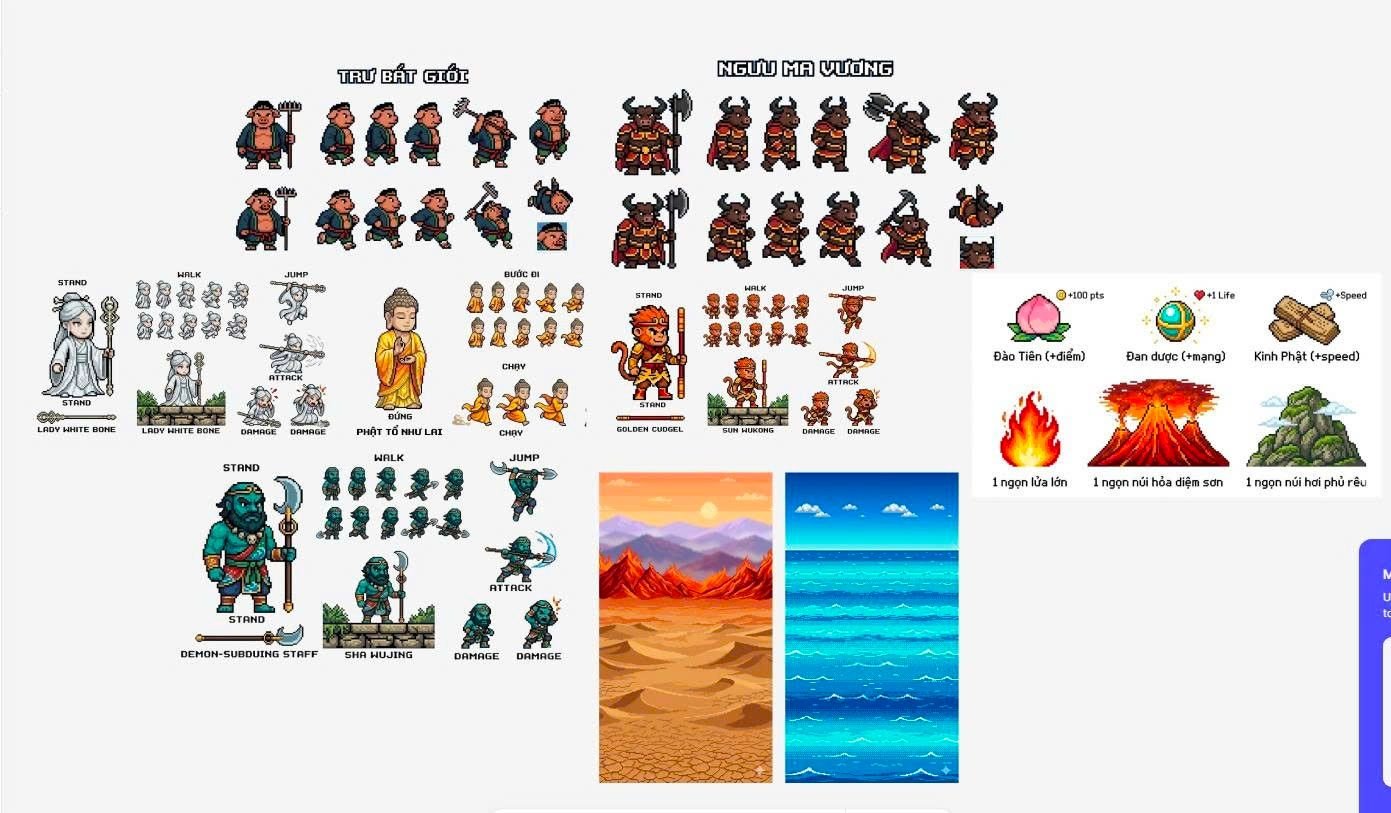
Small note: working with AI felt magical—like watching ideas slowly come to life—but it also asked for patience. I found myself refining and trying again more than I expected. In the end, it’s a beautiful process, just one that deserves more time than it seems at first.
Sunday: Polish → Test → Publish
This is where the game became real.
What I Fixed
- Dialogue that felt too long → split into slides
- Weak interaction → replaced with meaningful choices
- Ending → rewrote for emotional impact
What Almost Broke the Experience…
Mobile.
A single line of text that looked fine on desktop
was completely broken on phone.
Fix: shorter sentences, cleaner layout.
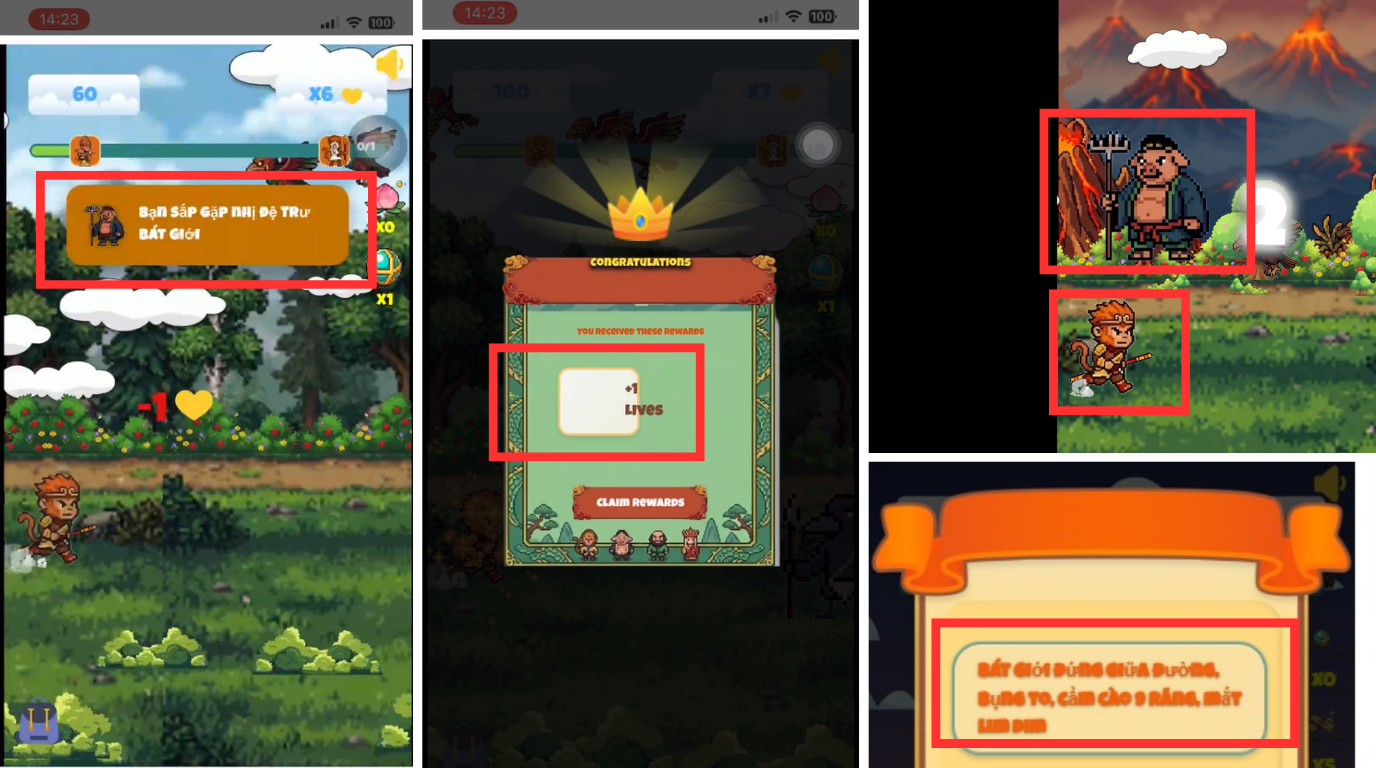
I made so many mistakes along the way—but somehow, fixing each one made the whole journey feel even more satisfying.
Then I Clicked Publish
That’s it.
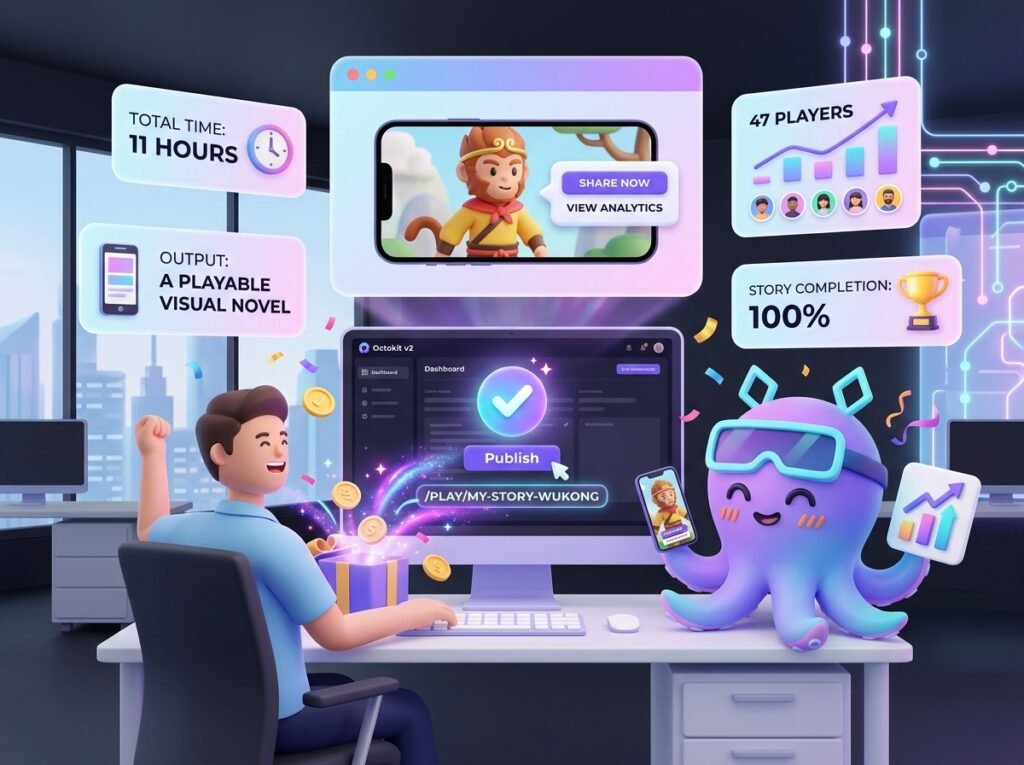
Octokit generated a live URL instantly.
By Monday morning:
- 47 players
- 3 messages from strangers
People finished the story.
That mattered more than anything.
Total Time: 11 Hours
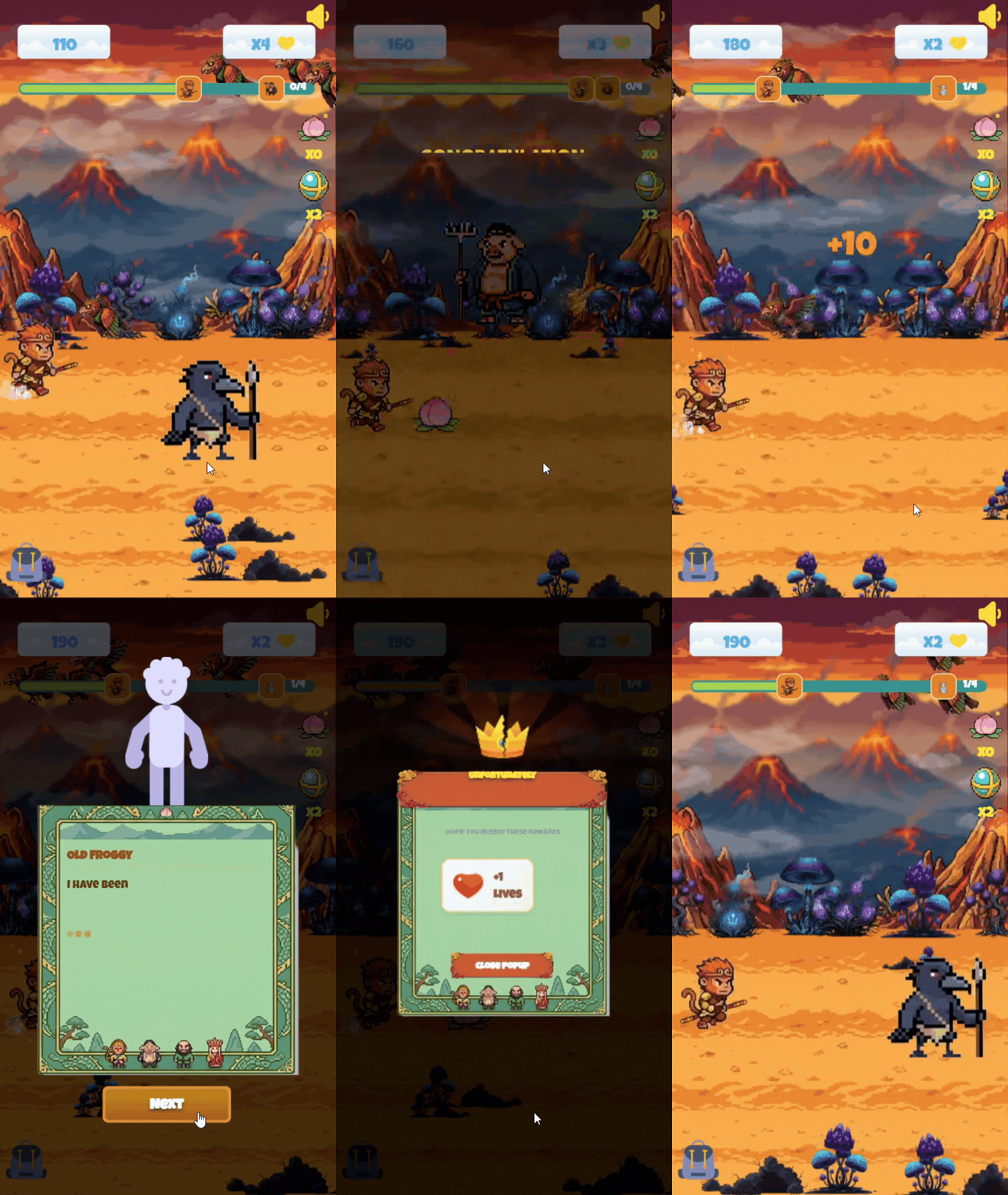
Output: A Playable Visual Novel
Not a prototype.
Not a draft.
A real, shareable experience.
What Surprised Me Most
1. Constraints Made the Story Better
Octokit uses a linear structure (no branching).
At first, that felt limiting.
But it forced me to:
- Focus on one strong narrative
- Cut unnecessary complexity
- Deliver a complete experience
Sometimes, less choice = better storytelling
2. AI Eliminates the Hardest Part: Starting
A bad draft is still better than a blank page.
The AI-generated structure:
- Gave direction
- Highlighted gaps
- Made editing faster
I wasn’t guessing anymore.
I was refining.
3. Mobile Changes Everything
Most players experienced the game on their phones.
That means:
- Shorter text
- Bigger tap areas
- Simpler visuals
Design for mobile first. Always.
What I’d Do Differently
- Start With Mobile, Not Desktop
- Designing desktop-first cost me time.
- Spend More Time on Visual Iteration
- AI is fast—but not precise
- Write Dialogue Before Using the Editor
- Editing inside the tool slowed me down. A simple doc first would’ve been faster.
Is Octokit Right for You?
If you want to build:
- A simple, playable story
- A marketing game
- An interactive narrative
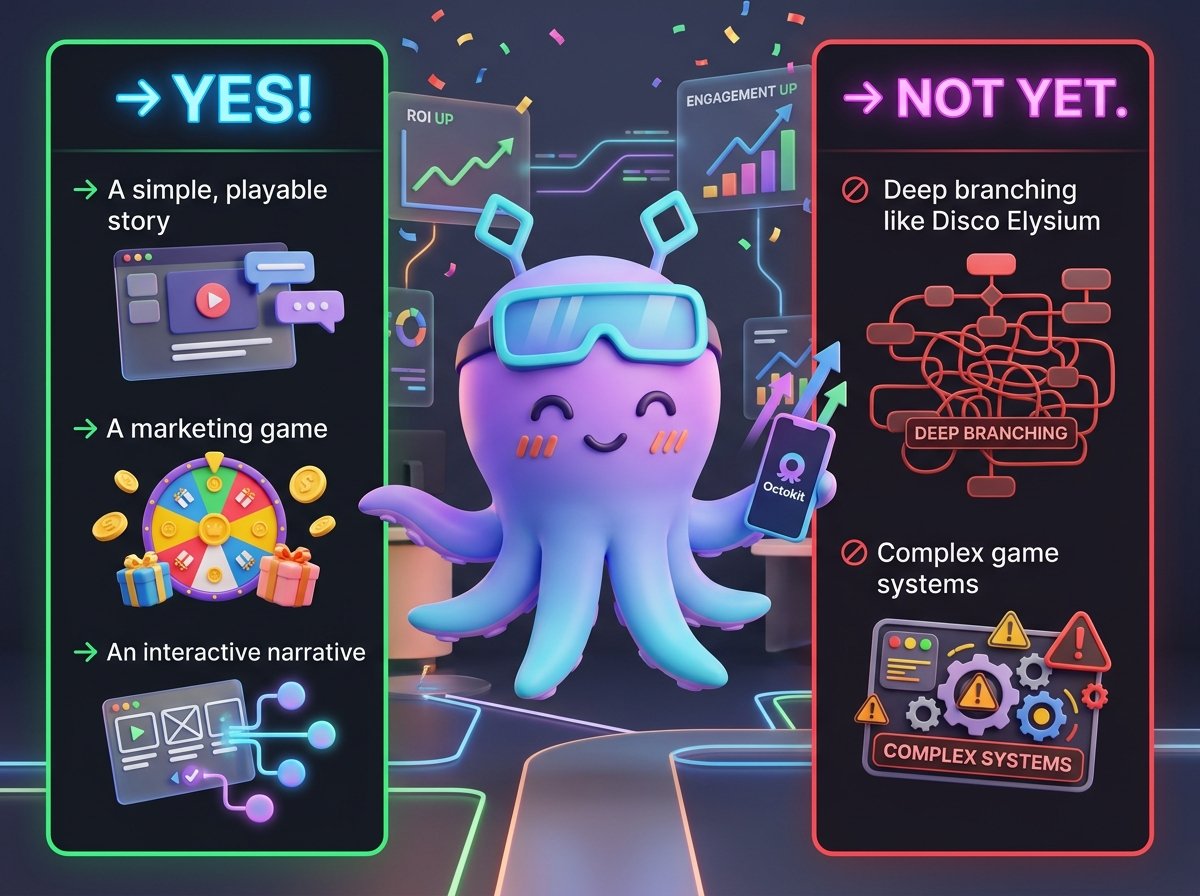
→ Yes.
If you want:
- Deep branching like Disco Elysium
- Complex game systems
→ Not yet.
FAQ
Do I need coding skills?
→ No. Octokit is fully no-code.
How long can my story be?
→ There’s no hard limit—but shorter, focused experiences perform better.
Can I use my own assets?
→ Yes. Upload your own images and keep your style.
How much does it cost?
→ Your first game is free.
Build Your First Game This Weekend
You don’t need:
- A dev team
- A big budget
- Months of production
You just need a starting point.
Start here → https://octokit.co
 Back
Back