



A Lunar New Year (Tet) marketing budget may sound huge, but after deducting media and production, how much is actually left for the core idea?
The majority of year-end budgets are swallowed up by non-negotiable line items: media buying, content production, and prizes. By the time it comes to investing in creative execution, funds are nearly exhausted. This article helps you prioritize your Tet marketing budget step-by-step and highlights hidden costs that are often overlooked—especially when outsourcing custom game development.

Budgeting Rule: The Creative Idea Comes First
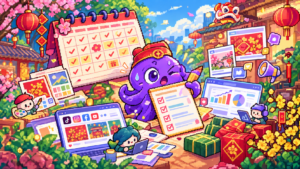
Before allocating funds, lock in your primary objectives and KPIs. A lead generation campaign requires a completely different spending structure than a brand awareness drive. If you haven’t finalized your roadmap yet, review the 30-day checklist for Tet 2027 marketing plan.
Remember one thing: media only amplifies what you already have. If the creative concept is weak, extra ad spend will only buy more views that people quickly forget.

Sample Budget Allocation Table (Illustrative)
The table below is an illustrative example to help you visualize allocation strategy—it is not an industry benchmark. Adjust it according to your specific goals and campaign scale.
| Category | Sample % | Notes |
| Media / Advertising | 35-40% | Amplifying the campaign |
| Concept & Experience Production | 25-30% | Game development, content, design |
| Prizes & Rewards | 15-20% | Vouchers, physical gifts, digital rewards |
| Operations & Analytics | 5-10% | Tracking, lead nurturing |
| Contingency | 5-10% | Last-minute revisions |
➤ Set aside dedicated funds for creative ideas and contingencies, as these are usually the first items slashed when budgets tighten.
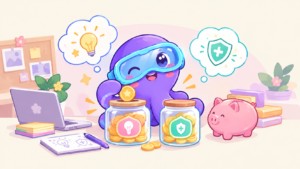
Hidden Costs of Custom Game Outsourcing
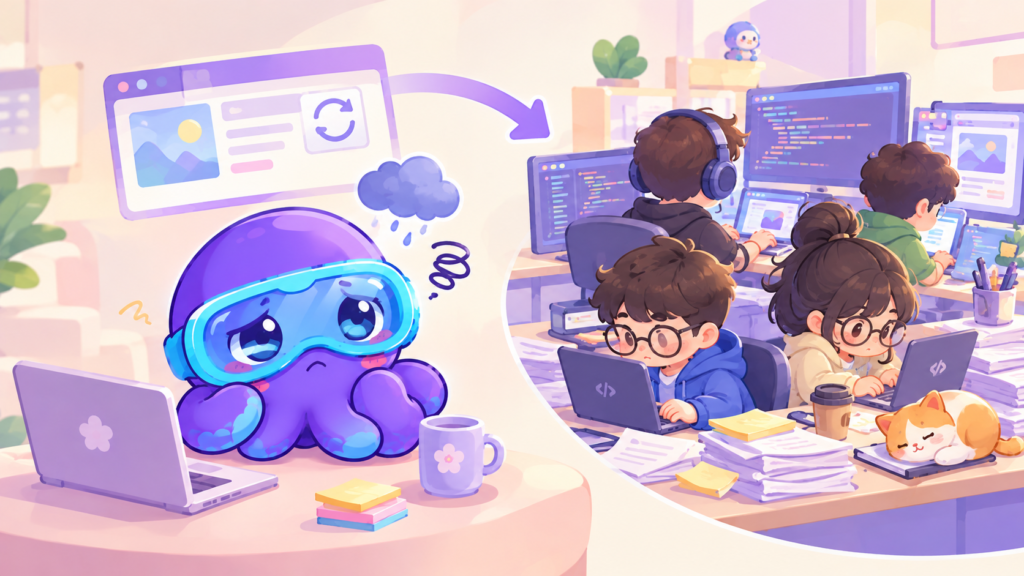
When hiring an external vendor to build a custom game, the initial quote is often just the tip of the iceberg. Expenses that frequently inflate the bill include:
-
Multiple revision rounds: Every change to characters, game levels, or rewards can incur additional fees.
-
Infrastructure & operations: Hosting servers, handling traffic spikes, and managing automated gift distribution systems.
-
Lead collection & authentication: OTP verification services and reward distribution workflows are often priced as separate items.
-
Turnaround delays: Prolonged development forces late media launches or rush delivery surcharges.
-
Vendor lock-in: Mid-campaign content tweaks require going back to the development team every time.
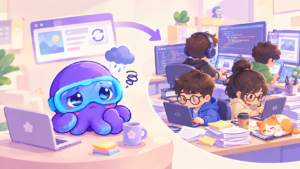
➤ When comparing vendor proposals, evaluate these potential hidden costs rather than relying solely on the front-page estimate.
Comparison with No-Code Game Building
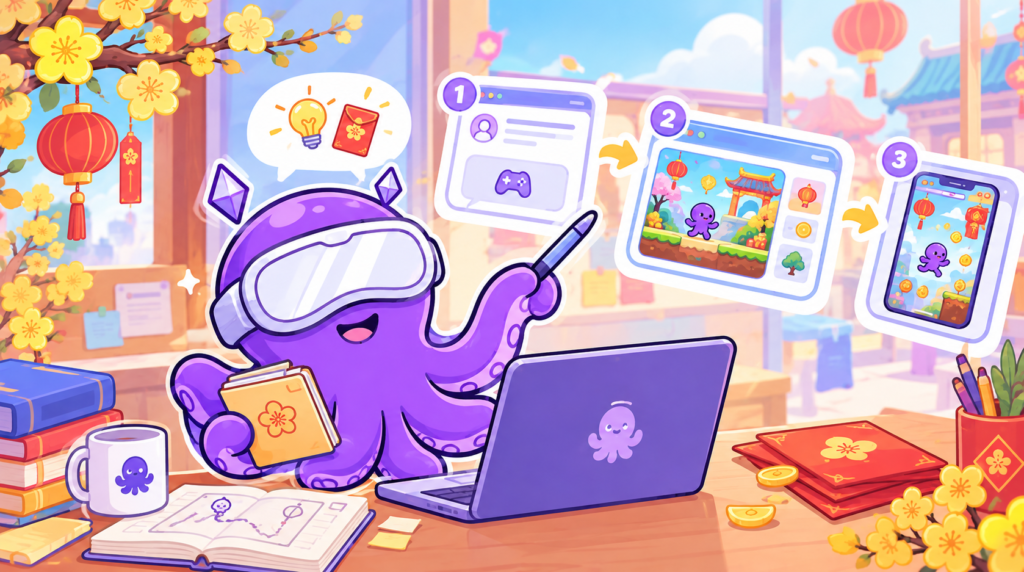
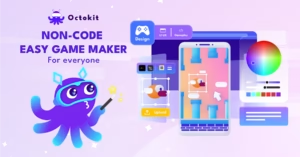
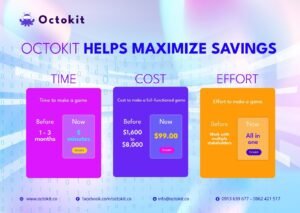
With a no-code platform, many of these operational components are built-in from day one. You start with Octokit’s ready-to-use game templates, customize them using the drag-and-drop editor, and update content on the fly. Modules like reward distribution, OTP verification, and campaign scheduling are natively integrated—see how to deploy a marketing game in minutes.
Spending Breakdown Comparison:
| Criteria | Custom Game Outsourcing | No-Code Platform |
| Revisions | Handled by dev teams, slow | Self-edited instantly in Editor |
| Time to Playable Demo | Usually measured in weeks | Hours to a few days |
| Reward Systems & OTP | Typically charged separately | Built directly into the system |
| Experimenting with Concepts | Costly | Easy and cost-effective |
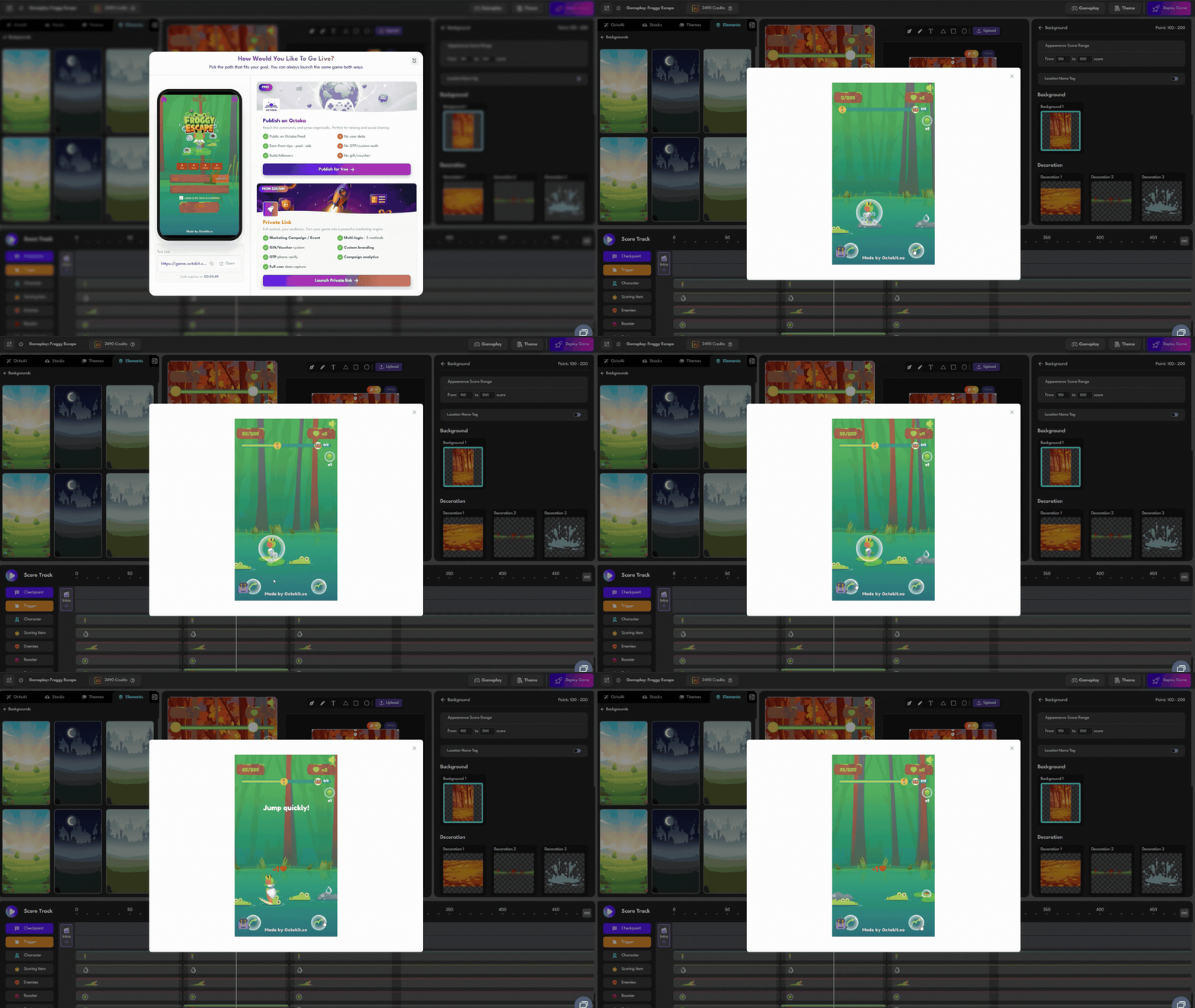
If you need a playable demo faster, leverage AI-generated minigames to build the framework, then fine-tune. The time and capital saved can be redirected to higher-impact areas: prize pools managed via a reward management system and media promotion.
➤ Going no-code isn’t just about cutting costs—it allows you to allocate your budget into creative concepts and user rewards instead of unexpected technical overhead.
Conclusion
A cost-effective Tet marketing budget protects the investment in creative execution, accounts for hidden technical expenses, and selects production workflows that allow rapid testing and iteration. Start with your primary objectives, use the sample breakdown above as a template, and tailor it to your operational needs.
Want to explore past live campaigns? Check out the Octokit portfolio. Or start testing with Octokit’s templates and Editor to build your first demo before finalizing your budget.
 Back
Back