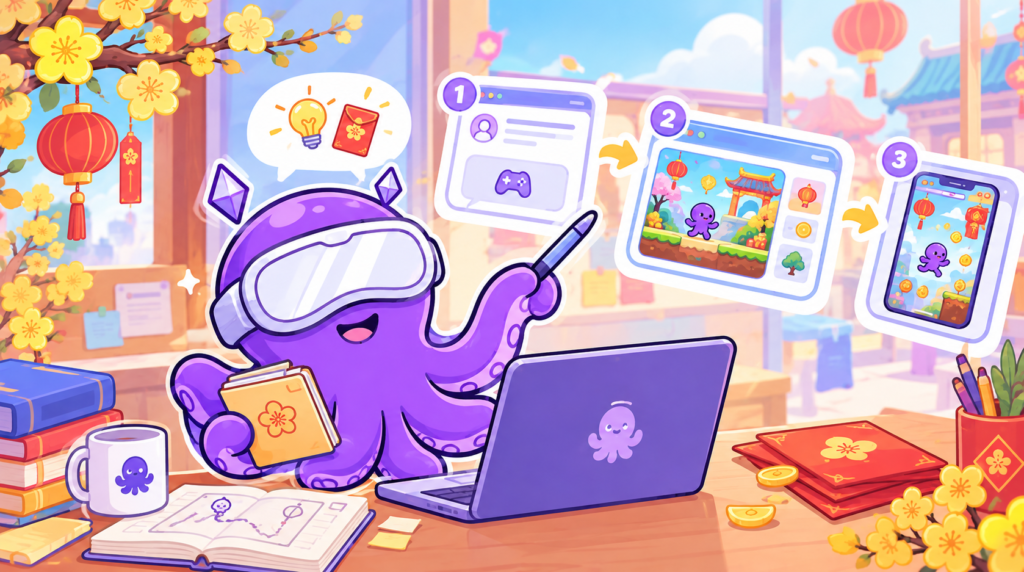



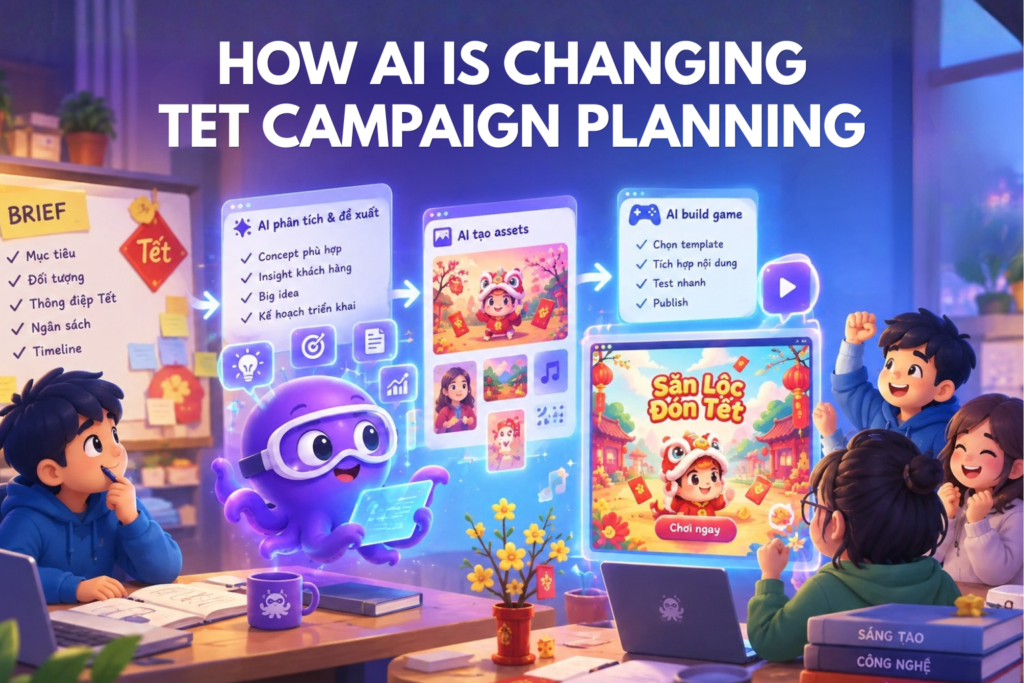
Building a game used to take three weeks and a team of developers. Now it can take just one prompt and one good idea.
That’s what AI minigame creation is changing for marketers. With Tet right around the corner, time is the one thing you’re short on. This post shows how to go from brief to a playable game in a single afternoon.
Why AI matters for seasonal marketing
Tet marketing has one defining feature: the deadline can’t move. The first day of the Lunar New Year arrives on schedule, whether your brief was approved late or your game isn’t finished.
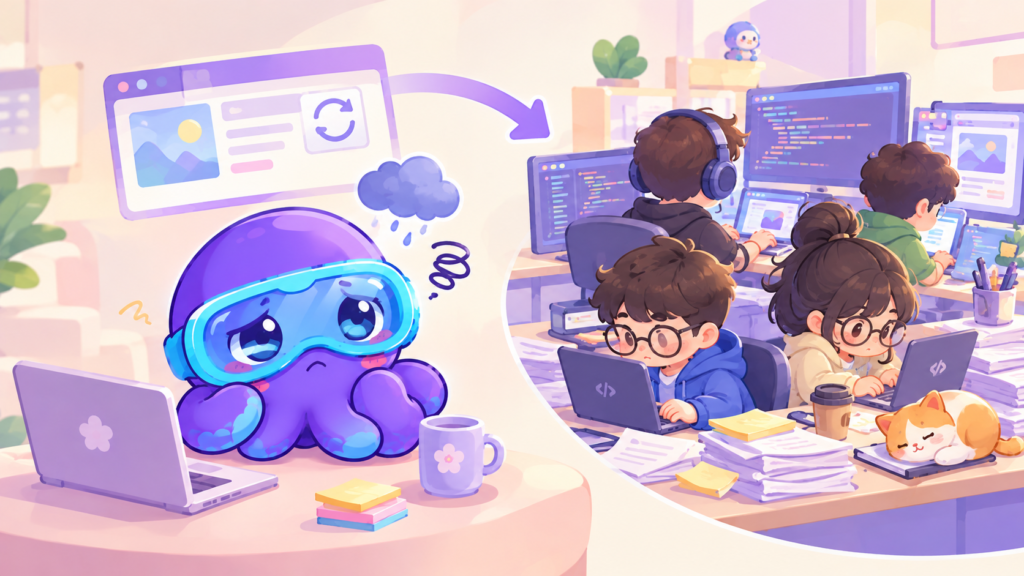
In the past, a gamification campaign went through many stages: writing the brief, hiring developers, waiting for the build, revising, testing. One late stage was enough to push the whole campaign out of the year-end window.
AI shortens exactly those stages:
• Get a playable version in a few hours instead of a few weeks.
• Find out whether an idea works without waiting for a dev team.
• Spend your time on what matters: the idea, the rewards, and distribution channels.
➤ The time you save doesn’t disappear. It shifts to optimization and promotion, where campaign results are decided. See also: 30-day checklist for your Tet 2027 marketing plan.
Turning a prompt into a game concept
Start by writing down what you want, not by writing code. A good prompt has 4 parts:
• Core action:jump, dodge obstacles, match items, or collect?
• Character and setting: the brand mascot in a Tet atmosphere.
• Player goal: for example, “survive 60 seconds to unlock a reward.”
• Campaign goal:collect leads, boost engagement, or bring players back.
Example: “A side-scrolling game where the main character is the brand mascot, collecting lucky money envelopes for 60 seconds and passing 3 milestones to unlock a voucher.”
➤ The clearer your prompt is about the action and the reward, the closer the first version will be to what you had in mind. For more storyline ideas, read how to design a story-driven game.
Humans design, AI builds
AI can build the game’s framework, but it can’t come up with the story for you. OctoAI was created as a creative support tool: you make the decisions, and AI speeds you up.
An effective way to split the roles:
- You: customer insight, the idea, brand voice, and rewards.
- AI: builds the first playable version from your prompt.
- You, again: refine it with the drag-and-drop editor, adding checkpoints, triggers, NPCs, and brand assets.
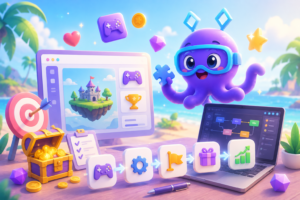
➤ Great games still start with people. AI only shortens the path from idea to playable version.
Test many ideas quickly
When a build takes only a few hours, you don’t have to bet the whole campaign on a single idea. Build 2–3 different demos and let colleagues and a few loyal customers play them.
Then compare them using 3 questions:
- Do testers play to the end?
- Do they want to play again?
- Do they understand how to claim the reward on the first try?
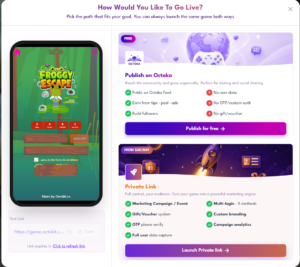
Whichever version gets the most “yes” answers moves forward. The rest is turning it into a complete campaign: add a leaderboard and publish the game to web, mobile, and social media.
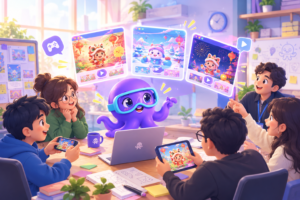
➤ Test many, pick one, then focus your effort: that’s the best way to use AI when time is limited.
Conclusion
AI won’t build your Tet campaign for you. It helps you get a playable version sooner, test more, and fix things in time. What makes or breaks the campaign is still your idea.
Want to try it now? Use OctoAI to turn your Tet idea into a first demo. For more inspiration, check out our article on AI and gamification or the Octokit portfolio.
 Back
Back